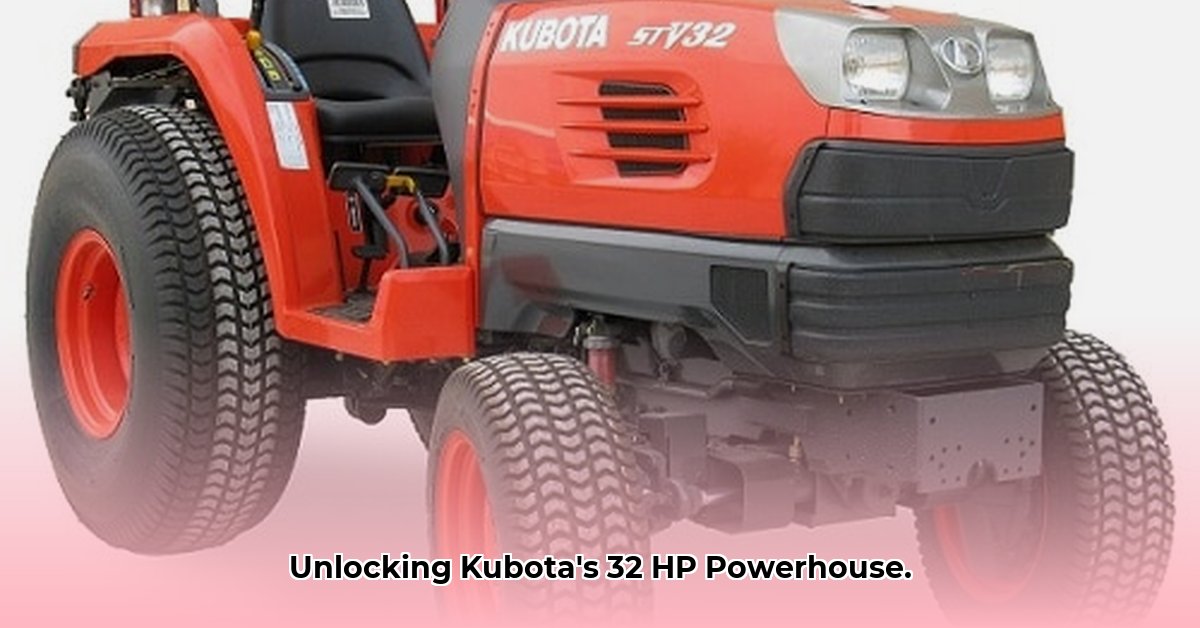
Thinking about boosting your landscaping business or streamlining your small farm's operations? A Kubota 32 hp tractor could be the ideal solution. This comprehensive guide will equip you with the knowledge to make an informed decision, covering everything from horsepower and features to maintenance and securing the best deal. For more information on Kubota tractor pricing, check out this helpful resource: Kubota Tractor Costs.
Power and Performance: Choosing the Right Tractor for Your Needs
A Kubota 32 hp tractor offers impressive versatility for smaller properties and a wide array of tasks. But what does that "32 hp" truly mean? Let's break it down:
The engine is the heart of the machine, determining fuel efficiency and overall power output. Different models may use slightly varying engines; always confirm the specifics. Equally vital is the PTO (Power Take-Off) horsepower – the power available for attachments like mowers and tillers. This is typically slightly lower than the engine's horsepower.
The hydraulic system is critical for operating implements. It provides the lift power for tasks such as raising implements or driving a front-end loader. The specified lift capacity (the maximum weight the tractor can lift) is a key factor to consider against your intended usage. Will you need to lift heavy implements? A higher lift capacity is essential in such situations.
Transmission type significantly impacts ease of operation. Hydrostatic transmissions are generally considered more user-friendly, allowing speed adjustments without shifting gears. Gear transmissions, on the other hand, often require manual gear changes. Choose the option aligning best with your experience level and comfort.
Maintaining Your Kubota: A Simple Maintenance Plan
Regular maintenance is crucial for maximizing the lifespan of your Kubota and preventing costly repairs. Proactive care is akin to preventative medicine for your machinery.
Here's a streamlined maintenance schedule:
- Oil Changes: Adhere to the intervals specified in your owner's manual. Using the correct oil type is paramount.
- Filter Replacements: Replace air, fuel, and hydraulic filters as recommended in your manual. These filters are crucial for preventing engine damage and maintaining efficient hydraulic system operation.
- Fluid Checks: Regularly check coolant, transmission fluid, and hydraulic fluid levels. Low levels can cause severe problems if not addressed promptly.
- Tire Pressure: Correct tire pressure is vital for both performance and fuel efficiency. Under-inflated tires wear faster and reduce fuel economy.
- Visual Inspections: Before each use, briefly inspect the tractor for loose bolts, leaks, or any other visible damage.
For more complex repairs, it’s advisable to consult a qualified mechanic, particularly for hydraulic system issues.
Cost Analysis: Is a Kubota 32 HP Tractor a Sound Investment?
The price of a Kubota 32 hp tractor varies based on whether you buy new or used, and the specific features included. New models command a higher upfront cost but come with warranty protection and peace of mind. Used tractors offer a more budget-friendly entry point but might require more maintenance or repairs.
Consider these cost elements:
- Purchase Price: Research prices of similar models from other brands for a fair price comparison.
- Maintenance: Account for routine maintenance costs, such as oil changes and filter replacements.
- Fuel Consumption: The engine's fuel efficiency will impact your long-term operational expenses.
- Repair Costs: Consider potential repair costs, which will typically be higher for used tractors.
- Potential Cost Savings: Will the tractor ultimately save you money compared to hiring contractors for similar tasks? This is paramount to your overall decision making.
Buying Decisions: New vs. Used Tractors
The choice between a new or used tractor hinges on your budget and your tolerance for potential repairs.
New Tractors: Offer warranties, the latest technology, and usually simpler financing. However, they come with significantly higher initial investment costs.
Used Tractors: Offer a lower purchase price but present a higher risk of unexpected repairs and uncertain maintenance history. A thorough pre-purchase inspection by a qualified mechanic is strongly recommended.
Locating the Ideal Tractor: Dealers, Test Drives, and More
Buying a tractor is a substantial investment; take your time. A reputable dealer is essential. Review online feedback, gather recommendations, and visit several dealerships to compare prices and services. Before committing, always test drive the tractor. Does it feel comfortable and responsive? Can you easily reach all the controls? This crucial step allows you to evaluate its handling and responsiveness. A well-researched purchase will likely result in years of reliable and efficient service.
Comparing Kubota Tractor Models for Diverse Agricultural Needs
Three Key Takeaways:
- Kubota offers a variety of tractors tailored to various farm sizes and tasks.
- Selecting the right tractor requires careful consideration of farm size, crop types, and budget.
- Matching tractor power to your specific needs optimizes efficiency and minimizes costs.
Assessing Your Requirements: The Initial Step
Before focusing on specific Kubota models, carefully examine your individual needs. What's the size of your farm? What crops do you cultivate? What tasks will the tractor undertake? Addressing these questions is essential for making a suitable comparison of Kubota tractor models.
Exploring Kubota's 32 HP Options and Higher Horsepower Models
Kubota offers several 32 hp tractors, each with unique strengths. Consider features such as transmission type (hydrostatic for enhanced maneuverability, or gear transmissions for greater power), hydraulics (considering your needed lift capacity), PTO horsepower, and fuel efficiency. For larger operations or more demanding tasks, higher horsepower Kubota models may be necessary. Consider models such as the LX series for increased power and capabilities.
Comparing Models: Essential Features
Here's a structured comparison framework:
- Engine and Power: Compare engine types (diesel is standard in agriculture), horsepower (nominal vs. PTO), and torque (higher torque means greater pulling power).
- Transmission: Hydrostatic transmissions are generally smooth; gear transmissions are usually more durable and fuel-efficient.
- Hydraulic System: Assess lift capacity and flow rate (speed of hydraulic operations).
- Three-Point Hitch: Evaluate capacity and ease of use (this connects implements to the tractor).
- Implement Compatibility: Ensure compatibility with your intended implements.
- Fuel Efficiency: Compare fuel consumption rates under similar conditions.
Maintenance and Operational Costs: A Long-Term Perspective
Beyond the initial purchase price, maintenance costs are equally critical. Factor in routine maintenance (oil changes, filter replacements) and the likelihood of repairs. A reliable machine will naturally lower long-term costs.
New vs. Used: A Careful Consideration
New tractors offer warranties and cutting-edge features. Used tractors might save you money up front, but may require repairs and may lack modern features. Your financial situation and risk tolerance will influence your decision. A professional inspection is crucial for used tractors.
Choosing the Right Dealer: A Crucial Partnership
A dependable Kubota dealer is essential for purchasing, service, and parts. Look for dealers with positive reviews and a commitment to customer support. Visiting local dealerships to experience the tractors firsthand is strongly recommended.